For many young South Africans, the road after matric hits a wall: university is expensive, takes years, and isn't guaranteed to end in a job. It's not only a school-leaver problem, either — the same math applies to anyone weighing a career change later on, when going back for a second degree is no more realistic than the first one was. So what's the alternative? On a recent episode of The Greenlight Show on SAUMA HD Radio, Code College founder Arnold Graaff made the case that coding might be one of the most practical answers going — and backed it up with two decades of results.
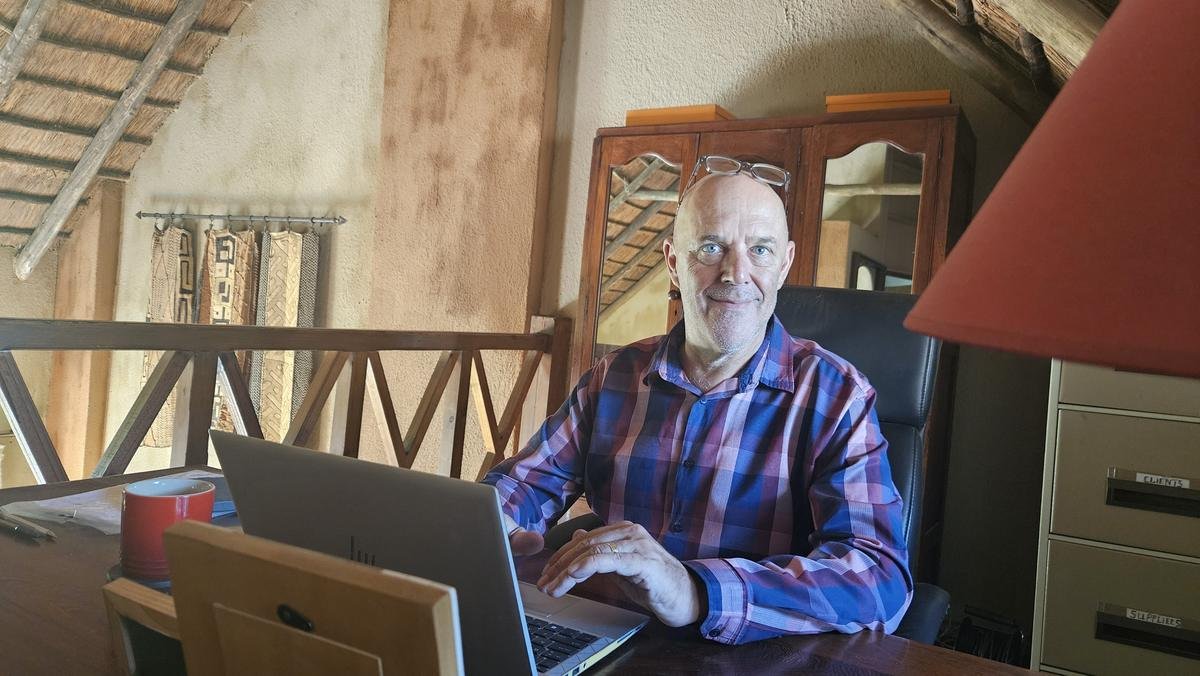
Arnold Graaff, founder of Code College.
🎧 Listen to the full interview: Arnold's conversation on The Greenlight Show, SAUMA HD Radio, 21 August 2026.
An Accidental Founder
Arnold didn't set out to build a bootcamp. He trained as a computer science graduate, but found the degree "very theoretical" and went straight into freelance contract work instead — chasing hands-on experience across as many industries as he could. Like most freelancers, that meant stretches on the bench between contracts.
"We actually saw there was a gap for freelancers to train one another in the evenings," he explained. Employers noticed, and asked him to run the same training during the day. By 2004 that had become five-day short courses under Compuways. But Arnold spotted a gap: those courses worked for people who already knew IT — not for school leavers starting from zero. So in 2014, Code College launched its first full coding bootcamp, built specifically to make beginners job-ready.
Why Coding, Specifically?
Arnold's argument is simple: every industry — mining, healthcare, legal, finance, you name it — runs on software, and companies compete on how good their systems are. That means demand for developers isn't tied to one sector's ups and downs; it's tied to competition itself, which never stops. "That's a good field to be in," he said, "because they will always be in demand."
He also thinks coding is under-marketed as a career path precisely because it's hard to explain at a school career day — most career counsellors have never written a line of code themselves.
The Bootcamp Math
The comparison to university is stark: a coding bootcamp costs roughly a quarter to a third of a university degree, in a quarter to a third of the time. University degrees aren't bad, Arnold says — they're just built to cover breadth, not to track the newest in-demand skill each year. And in an industry that reinvents itself annually, that lag matters.
Key takeaway: "By the time you're out of university, the world of coding has moved on — and you have to catch up." A bootcamp is built to close that gap, not widen it.
Does AI Kill Coding, or Change It?
Every generation has a technology that supposedly makes coding obsolete — high-level languages, no-code tools, and now AI. Arnold's take: AI isn't killing coding, it's shifting it. The coder's job is becoming more about orchestration — sitting between the business need on one side and the end user on the other, directing AI tools rather than being replaced by them. That's why Code College builds AI-assisted development into training from day one, rather than treating it as an add-on.
From No Plan to a Career
Arnold shared two stories on air. One is a graduate named Xolani: strong matric results, but no way to afford further study — his mother worked as a domestic worker. Code College tested him, saw the potential, and took him on. He earned his international certification quickly, moved through progressively bigger companies, and within five years was working at one of South Africa's major banks. A decade in, he's earning a top salary — all without ever completing a university degree.
The other: a student whose family was under serious financial pressure partway through the course. Motivated by the stakes, he started applying for jobs early and landed one before the course had even finished.
What a Day at Code College Actually Looks Like
The structure is deliberately built to mirror a real job, not a classroom. Mornings open with a standup — what did you finish yesterday, what's the plan for today — before any teaching starts. Lectures are interactive rather than lecture-hall-style presentations. Afternoons are hands-on: students work in teams on real projects, building the collaboration and soft skills employers actually screen for, alongside the technical ones.
Not Sure Yet? There's a Low-Risk Way to Find Out
For anyone on the fence, Code College runs a monthly taster session — a chance to sit in on a real class and get a feel for it before committing to anything. As Arnold put it, it's a way to "test the water" first.
Frequently Asked Questions
How long does a coding bootcamp take in South Africa?
At Code College, bootcamps typically run in the 10–12 month range depending on the track — roughly a quarter to a third of the time it takes to complete a university degree, rather than three to four years.
Is a coding bootcamp worth it if I'm changing careers rather than fresh out of matric?
Yes — the case in this article doesn't only apply at 18. Every industry runs on software, so demand for developers isn't tied to any one age or starting point; it's tied to how competitive companies need to be, which never lets up. A bootcamp is built to get you job-ready in months, rather than asking you to go back for another multi-year qualification.
Does AI make a coding bootcamp less useful, since AI can now write code?
No — it changes what the job looks like rather than removing it. AI has made the actual writing of code faster, but someone still has to direct it, understand the business need, and make the calls a tool can't. That's the "orchestrator" role Arnold Graaff describes, and it's why Code College builds AI-assisted development into training from day one rather than treating it as an afterthought.
How much does a coding bootcamp cost compared to a university degree?
Roughly a quarter to a third of the cost of a university degree, based on Code College's own comparison — in a quarter to a third of the time, too.
Can you get hired as a developer without a university degree?
Yes — Xolani, one of Code College's graduates, is a direct example. He couldn't afford further study after matric, but earned his international certification quickly and, within five years, was working at one of South Africa's major banks — no degree required.
What if I'm not sure a coding bootcamp is right for me yet?
Code College runs a monthly taster session so you can sit in on a real class before committing to anything — a low-risk way to "test the water" first.